Alaska Webcams: Watch Northern Lights, Glaciers & Bears Live
Stream Alaska live on webcam — northern lights, glaciers, brown bears, volcanoes, and wild landscapes from Katmai to Denali streaming 24/7.
Alaska is not a place that translates well to descriptions. You can read about 20-hour summer days, salmon runs so thick the river looks alive, and aurora displays that turn the entire sky into a slow-moving light show — but until you see it, none of it quite registers. That is exactly what Alaska webcams deliver. They put you on the ground in one of the most extreme and visually stunning landscapes on Earth, live, without a plane ticket or a bear spray canister.
Port of Cams indexes over 14,383 live camera feeds from around the world, and our Alaska webcams are some of the most dramatic in the entire collection. From brown bears catching salmon at Brooks Falls to the northern lights rippling over Fairbanks to glacier-fed valleys buried under fresh snow, these cameras capture a state that operates on a completely different scale than the Lower 48.
This guide covers the best Alaska webcams streaming right now, what to watch for in each season, and why Alaska’s extreme geography makes it one of the most rewarding places to watch on camera.
Aurora and Northern Lights Webcams
Fairbanks Aurora Cam
Fairbanks sits directly under the auroral oval — the ring-shaped zone around the magnetic north pole where northern lights activity is most frequent. That geographic sweet spot makes Fairbanks one of the best places on the planet for aurora viewing, and the webcams pointed at the sky above the city deliver some of the most spectacular light shows you will ever see on a screen.
The aurora webcams in the Fairbanks area capture the northern lights in real time: shimmering green curtains, pink and purple edges, and on the strongest nights, rare red aurora that fills the entire sky from horizon to horizon. The cameras are sensitive enough to pick up auroral activity that might be too faint for the naked eye, which means you will sometimes catch displays on camera that locals standing outside cannot see as clearly.
When to watch:
- September through March is prime aurora season. The long, dark Alaska nights provide the canvas the northern lights need. Peak activity tends to hit between 10 PM and 2 AM Alaska time.
- Equinox periods (late September and late March) often produce the strongest displays due to how the Earth’s magnetic field interacts with the solar wind during those transitions.
- Solar maximum years dramatically increase aurora frequency and intensity. During active solar cycles, you might see displays several nights per week instead of a few times per month.
- Summer months (May through July) are a wash for aurora viewing. Alaska’s midnight sun means the sky never gets dark enough, even though auroral activity is still happening overhead.
Pro tip: Check the NOAA Space Weather Prediction Center’s Kp index before tuning in. A Kp of 3 or higher usually means visible aurora in Fairbanks. A Kp of 5 or above can produce displays visible as far south as the northern Lower 48 states, and the Fairbanks cameras will be putting on an absolute show.
What Makes Alaska Aurora Cams Different
You can watch northern lights webcams from Scandinavia, Iceland, and northern Canada — but Alaska’s aurora cameras have a few advantages. Fairbanks is accessible, well-instrumented, and sits at a latitude (64.8 degrees north) that puts it squarely in the sweet spot for auroral frequency without being so far north that perpetual twilight washes out the displays in shoulder seasons. The dry interior Alaska climate also means clearer skies than many subarctic locations, giving cameras more good nights per season.
Bear Cams: Brooks Falls and Katmai
Brooks Falls Bear Cam — Katmai National Park
If you have never watched the Brooks Falls Bear Cam, stop reading this and go watch it during July. Seriously. This camera, operated by explore.org in partnership with the National Park Service, is positioned above Brooks Falls in Katmai National Park, where dozens of Alaska brown bears gather to intercept sockeye salmon leaping up the waterfall.
The footage is raw, unscripted, and completely addictive. A 1,000-pound bear stands at the top of a six-foot waterfall, mouth open, and catches a salmon out of mid-air like it is nothing. Cubs tumble over rocks. Dominant males shove each other aside for the best fishing spots. On a busy day, you might see 15 or more bears in the frame at once, each one operating on pure instinct and centuries of learned behavior.
When to watch:
- July is peak salmon run season. The sockeye stack up below Brooks Falls, and the bears are there in force. This is the single best month for dramatic catches and wall-to-wall bear activity.
- September brings Fat Bear Season. The bears have been eating nonstop for months and are now at their heaviest — some tipping the scales at 1,200 pounds or more. Explore.org runs the famous Fat Bear Week bracket tournament, where viewers vote on the fattest bear. It is the strangest and most wholesome competition on the internet.
- June and August are transitional months. Bears are present but may be fishing at other spots along the river. Activity at the falls is less predictable.
- October through May the bears are hibernating. The waterfall still flows, and occasional wildlife passes through, but the main attraction is asleep underground.
River Watch and Other Katmai Views
The River Watch cam provides a wider downstream view of the Brooks River, where you will see bears wading, mothers teaching cubs to fish, and the occasional standoff between rivals. This camera captures more of the social dynamics — the hierarchy, the body language, the way a mother bear positions herself between her cubs and a larger male. Wildlife behavior at its most unfiltered.
Glacier and Mountain Webcams
Alyeska Resort — Roundhouse Cam
The Alyeska Roundhouse webcam sits at 2,300 feet on Mount Alyeska in Girdwood, about 40 miles south of Anchorage. This camera delivers a panoramic view of the Turnagain Arm valley, surrounding Chugach Mountains, and — on clear days — glimpses of glacial terrain stretching into the distance.
What to watch for:
- Winter (November through April): Alyeska is a working ski resort, and this camera is invaluable for checking snow conditions, visibility, and whether the mountain is socked in with clouds or wide open. Alaska ski weather changes fast. A morning whiteout can burn off into bluebird conditions by noon.
- Summer: The same camera shows the dramatic transformation of the landscape — green valleys, waterfalls from snowmelt, and lingering snow on the peaks above. The contrast between winter and summer views from the exact same camera is staggering.
- Alpenglow season (late fall and early spring): When the sun sits low on the horizon, the mountains around Alyeska light up in shades of pink and orange that last for extended periods thanks to Alaska’s extreme sun angles.
Glacier Views Across Alaska
Alaska contains more glacial ice than the rest of the inhabited United States combined. Over 100,000 glaciers cover roughly 28,000 square miles — about five percent of the state’s total land area. Several webcams across the state capture these rivers of ice in various stages of advance and retreat.
Glacier webcams are slow-motion drama. On any given day, the view might look static. But check back over weeks and months and you will see the face of a glacier calving chunks of ice, meltwater pools forming and draining, and snowlines creeping up and down the mountains with the seasons. These cameras are documenting geological change in real time, and the long-term time-lapse compilations are genuinely striking.
Volcano Webcams
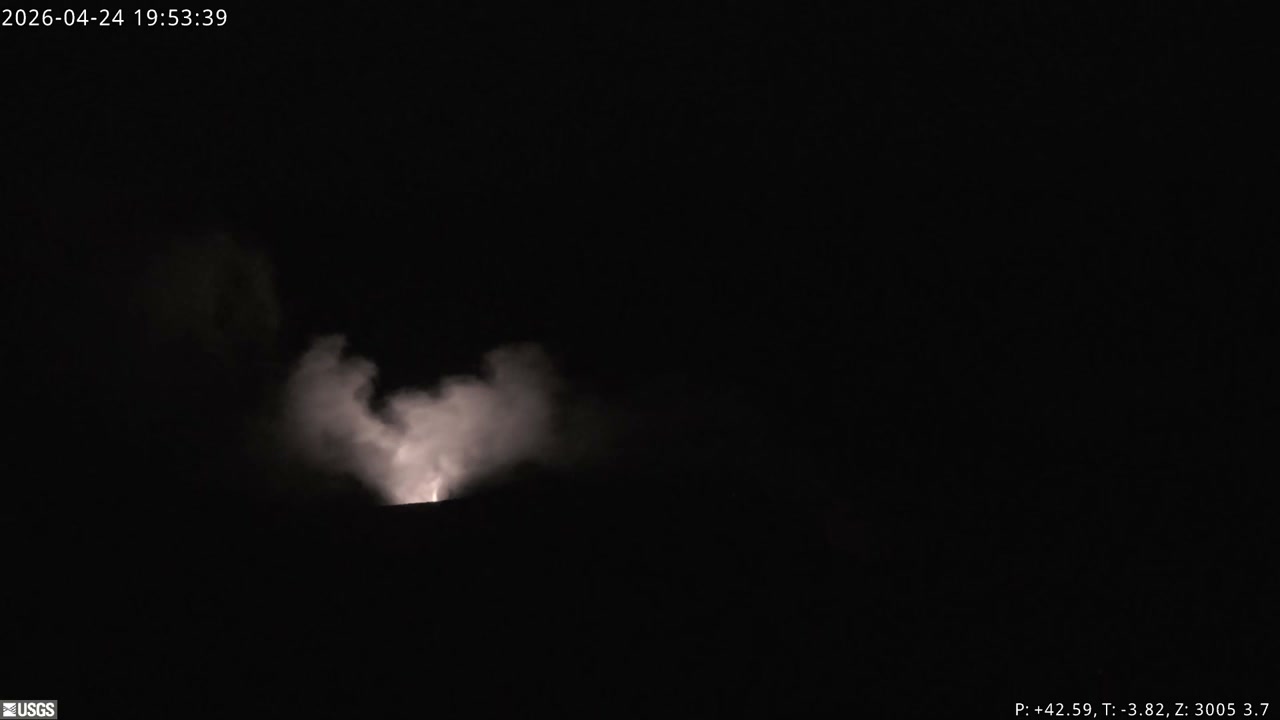
Alaska sits on the Ring of Fire and contains over 130 volcanoes, more than 50 of which have been active in recorded history. Several of these are monitored by webcams operated by the Alaska Volcano Observatory, giving you live views of some of the most active volcanic terrain in North America.
The volcano cams capture steaming vents, fresh ash deposits, and the occasional eruption plume rising tens of thousands of feet into the atmosphere. Alaska volcanoes do not always make national news because they are remote, but they are among the most active on the continent. Pavlof, Shishaldin, and Cleveland have all erupted in recent years, and webcams on nearby peaks or monitoring stations provide a front-row seat.
What to watch for:
- Steam and gas emissions from active vents, which can increase before an eruption
- Ash plumes that can ground commercial flights across the Pacific
- Lahars and mudflows on the flanks of glaciated volcanoes after eruptions melt ice
- The general mood of the volcano — sounds odd, but after watching these cams regularly, you develop an eye for when something looks different
For more on volcano watching, check out our volcano webcams guide.
What Makes Alaska Webcams Unique
Alaska webcams are different from webcams anywhere else in the world, and it comes down to three things: scale, extremes, and wildlife density.
The Scale
Alaska is 663,000 square miles. Texas fits inside it twice. A single webcam in Alaska might overlook a valley larger than some East Coast states. The depth of field on these cameras — where you can see 50 or 100 miles on a clear day — is something you simply do not get from a camera pointed at a beach or a city intersection. When you watch an Alaska webcam, the landscape dwarfs everything in the frame, including the bears.
The Extremes
No other state experiences the range of conditions Alaska does. In Fairbanks, summer temperatures can hit 90 degrees Fahrenheit while winter drops to minus 50. The sun does not set for weeks in June and barely rises in December. Webcams capture this full spectrum — the eerie blue twilight of a January afternoon, the golden midnight sun of a June evening, the sudden violence of a fall storm rolling across the mountains.
This means Alaska webcams are never boring. The same camera tells a completely different story depending on when you check it. A glacier cam in February shows a frozen, monochrome world. That same cam in July shows green valleys, rushing meltwater, and tourists hiking trails that were buried under ten feet of snow four months earlier.
The Wildlife
Alaska has more bears than people in some regions. Moose wander through residential neighborhoods. Eagles perch on lampposts. The wildlife density is high enough that animal sightings on webcams are not rare events — they are regular occurrences. The Katmai bear cams are the most famous example, but even the mountain and glacier cams will occasionally show a moose crossing a valley, a wolf trotting along a ridgeline, or a bald eagle perched in the foreground.
Seasonal Guide: What to Watch and When
Spring (April - May)
- Snow breakup on rivers and lakes — dramatic ice jams and floods
- Bears emerging from hibernation, often visible on mountain cams looking thin and hungry
- Migrating birds arriving by the millions on coastal wetlands
- Increasing daylight: from 14 hours in April to 20+ hours by late May
Summer (June - August)
- Peak bear cam season — Brooks Falls salmon run in July is the main event
- Midnight sun: 24 hours of daylight in Fairbanks and points north
- Glacier calving activity increases as temperatures rise
- Wildflower blooms across alpine meadows visible on mountain cams
- Alyeska and mountain cams show snow-free peaks and hiking conditions
Fall (September - October)
- Fat Bear Week at Katmai (late September / early October)
- Aurora season begins as darkness returns to interior Alaska
- Tundra turns crimson and gold — visible on elevated cameras
- First snowfall on peaks, often as early as September
- Moose rut season: bulls with massive antlers visible on wildlife cams
Winter (November - March)
- Prime northern lights viewing on aurora cams
- Extreme cold and short days create dramatic lighting conditions
- Ski conditions on Alyeska and other mountain cams
- Frozen landscapes, ice fog in interior valleys, snow-loaded trees
- The quietest season for wildlife cams, but the most spectacular for sky cams
Start Watching Alaska Live
Alaska is a place that rewards patience and attention, and webcams are the perfect medium for both. You do not need to wait for a documentary crew to edit footage and add a soundtrack. The cameras are running right now, showing you exactly what Alaska looks like at this moment — whether that is a bear standing in a waterfall, the northern lights dancing over Fairbanks, or a glacier-carved valley sitting in perfect silence under a blanket of fresh snow.
Browse all our Alaska webcams and 14,383+ other live feeds on Port of Cams. Bookmark the ones that grab you. Check back at different times of day and across different seasons. Alaska never looks the same way twice, and these cameras prove it every single day.